the brief
Historically known as the Duck Club, this 26-acre property of flat to gently rolling grassland with numerous mature Coastal and Valley oaks in Santa Ynez, CA., had always been used for grazing cattle and bird hunting. The storm water creek that runs through it was dammed sometime mid-century and two ponds were created to retain water for agricultural and recreational uses. A prefab barn, 1300sf cabin, and bridge for access across a small creek were the only structures on the property.
Although bearing little resemblance to what it is today, the current owners saw that the property possessed several fundamentally attractive features which are a rare find in combination: i) broad and pastoral views, ii) wide open space with interesting and varied terrain, iii) usable land, iv) abundant water supply, v) a private and secluded rural setting but with close proximity to the conveniences of town, vi) coveted southern exposure, and vii) the potential for a spectacular water feature. It was acquired with the belief that these character traits justified a significant investment in capital and time that would result in a unique estate.
the vision
Residence
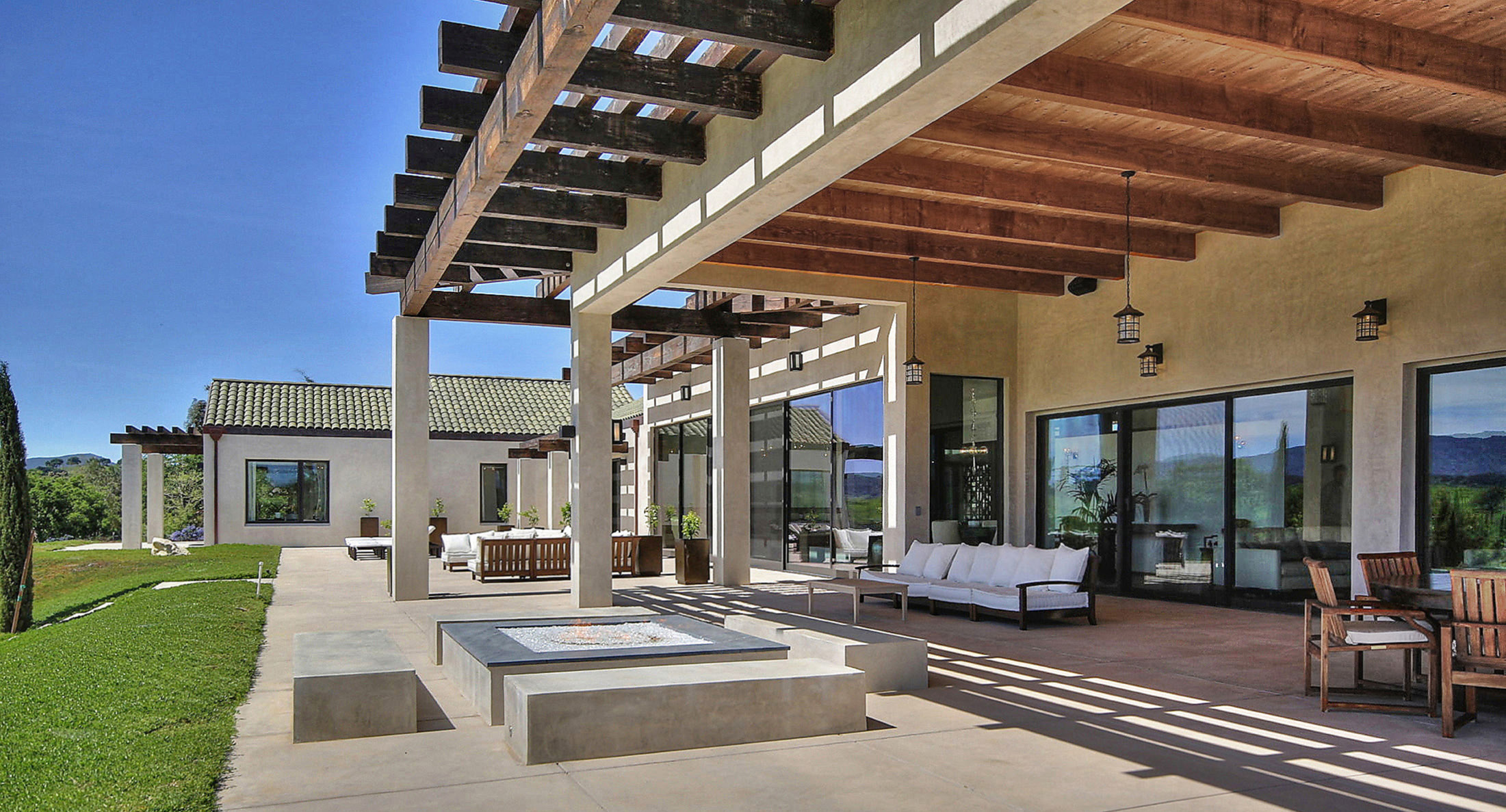
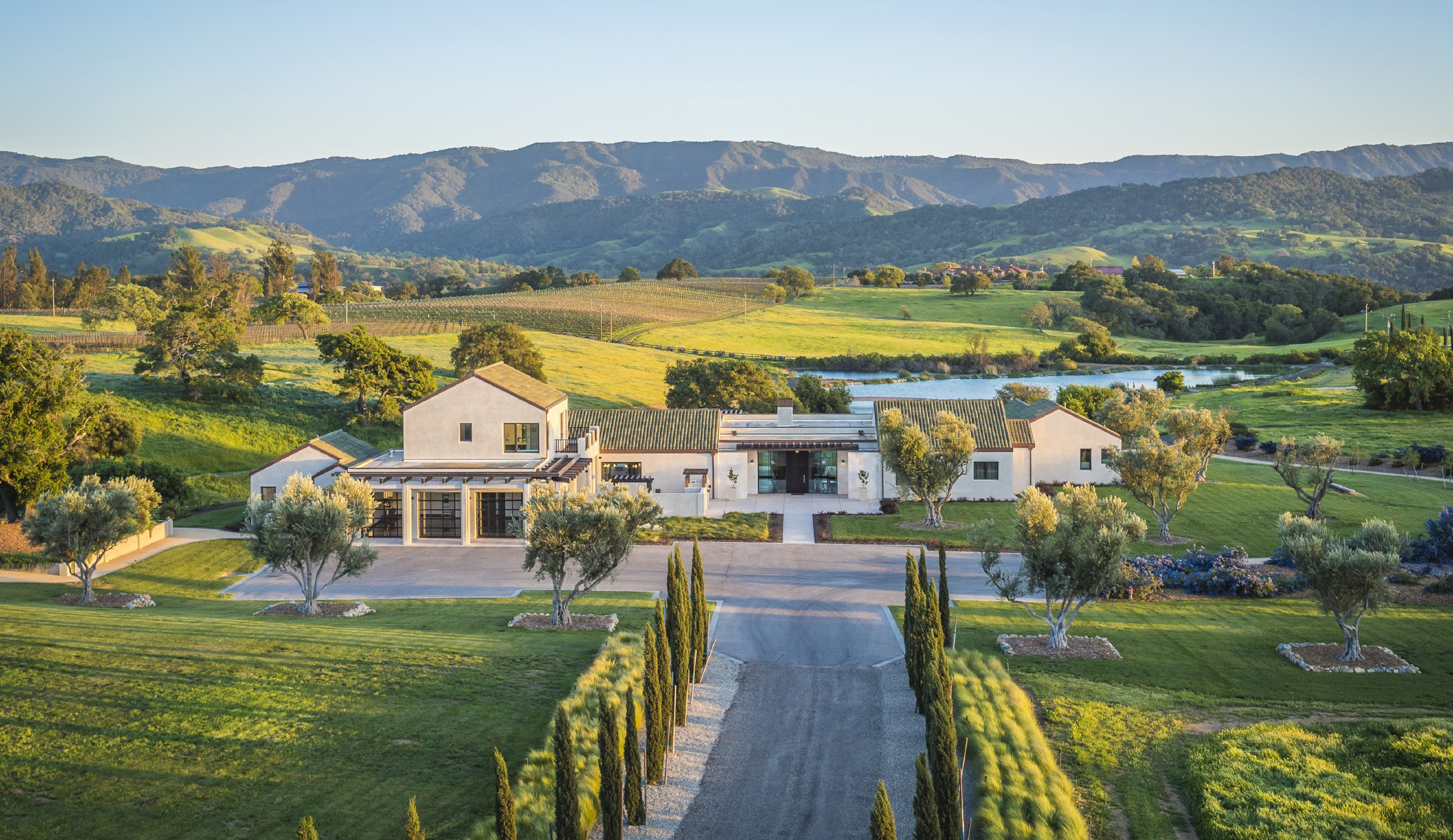
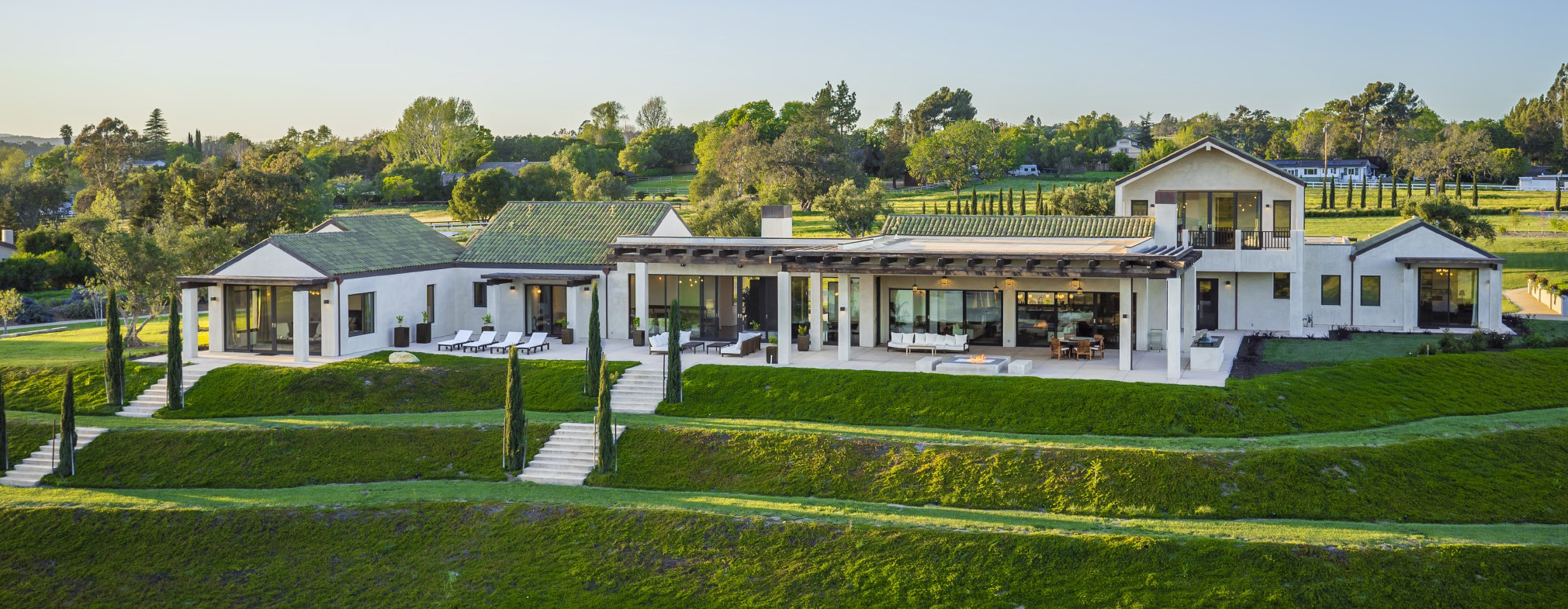
These unique features demanded significant architectural consideration. A modern interpretation of classic mission architecture, this residence blends the key design characteristics of mission (thick stucco walls, heavy beam trellising, extensive copper detailing, olive clay tile roof and varying roof profile) with clean lines, rectilinear shapes and expansive glass to take advantage of the spectacular views.
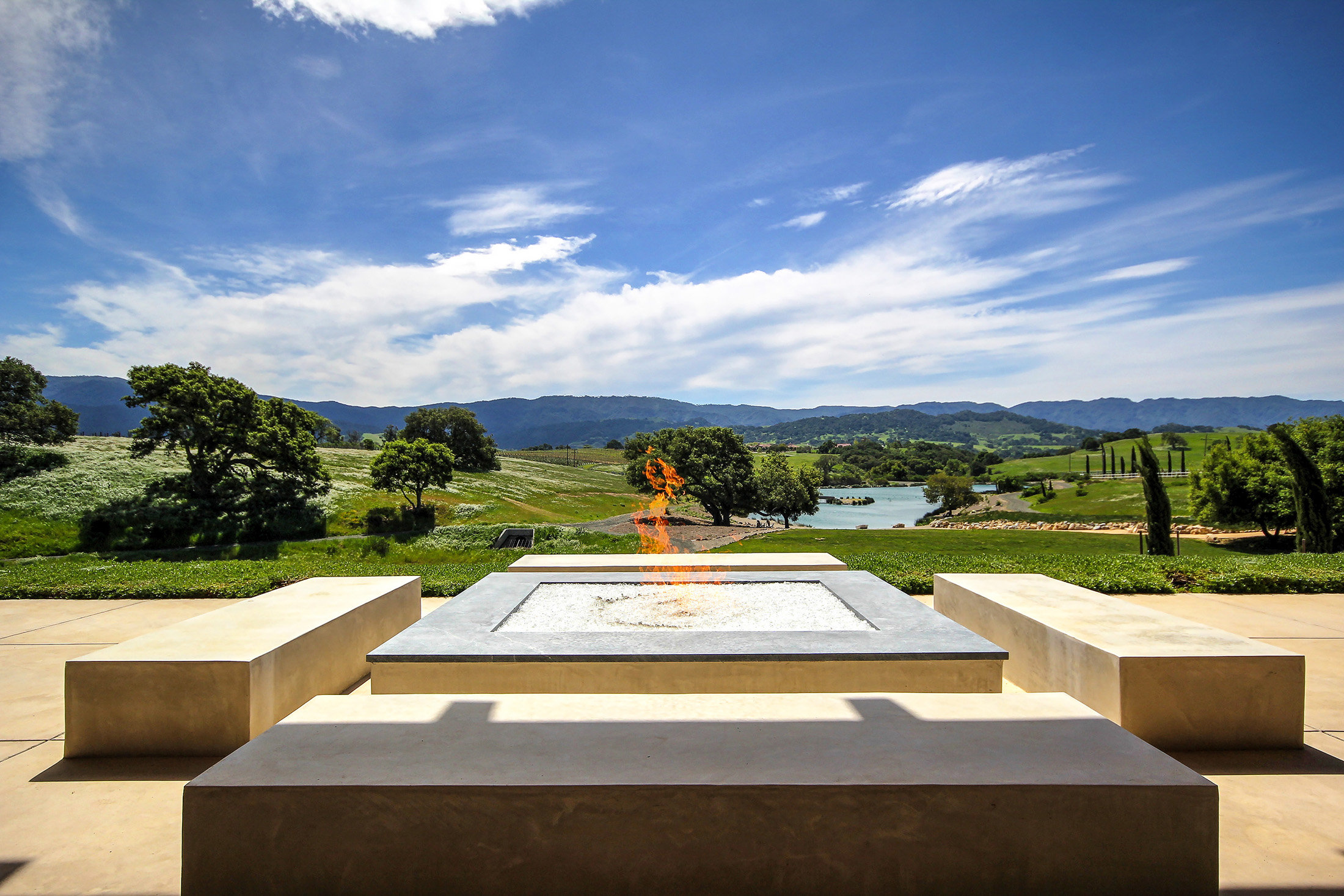
The 12” thick exterior walls are finished with smooth troweled heavily burnished stucco and the entrance facade is clad with large format polished marble tiles. The main entrance is accessed by a 10’ entry door floating between two oversized sheets of glass allowing a glimpse into the rear lake upon approach to the entrance. 7,000 square feet of exterior flatwork (terraces, walkways, courtyard surround the perimeter of the home and facilitate indoor and outdoor living. Substantial stucco columns support heavy beam trellising in both the front and back of the house. The vertical rows of the new clay tile roof in shades of olive to loden green, were chosen to reflect the geometry of the distant vineyards as one approaches the residence.
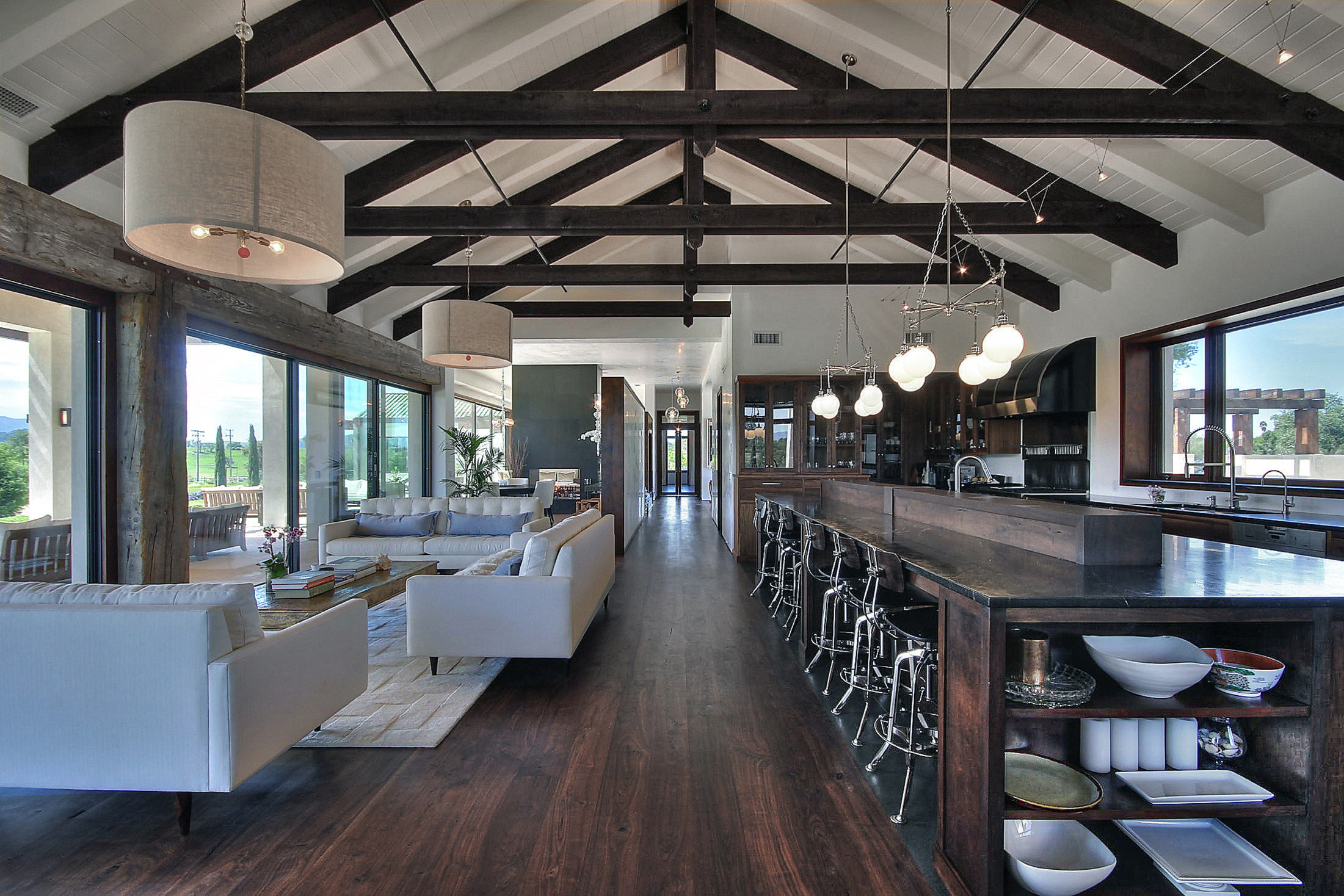
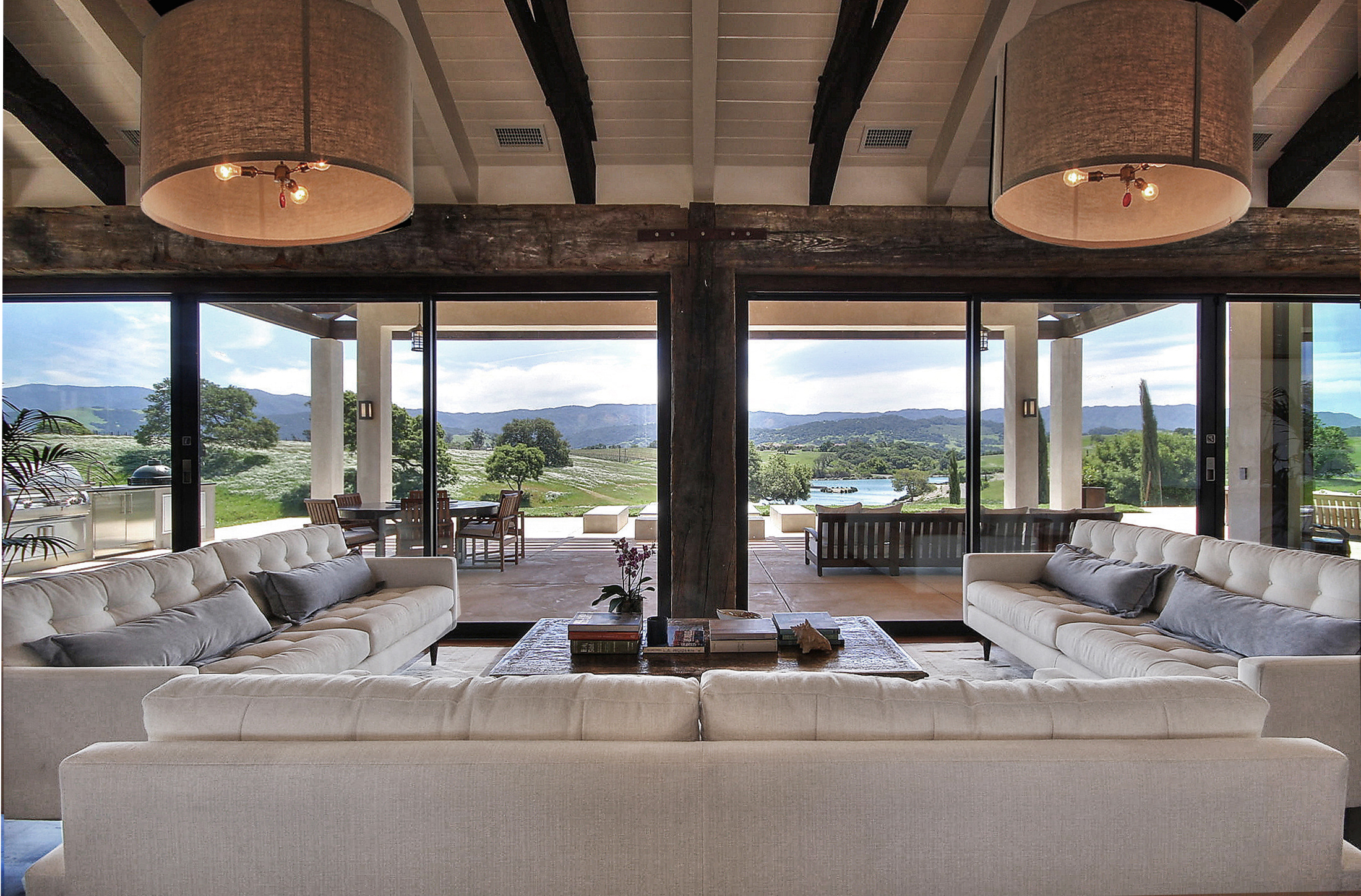
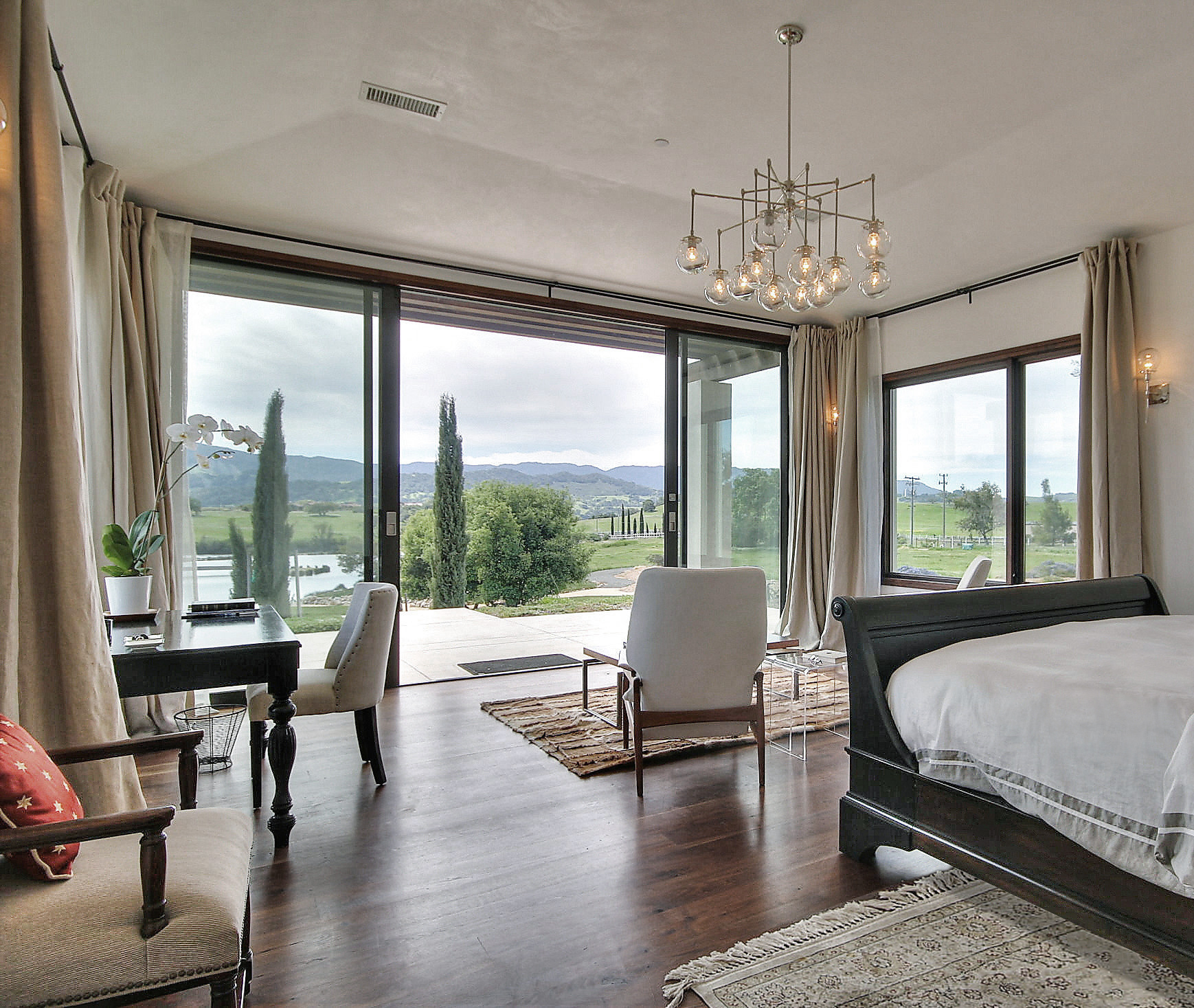
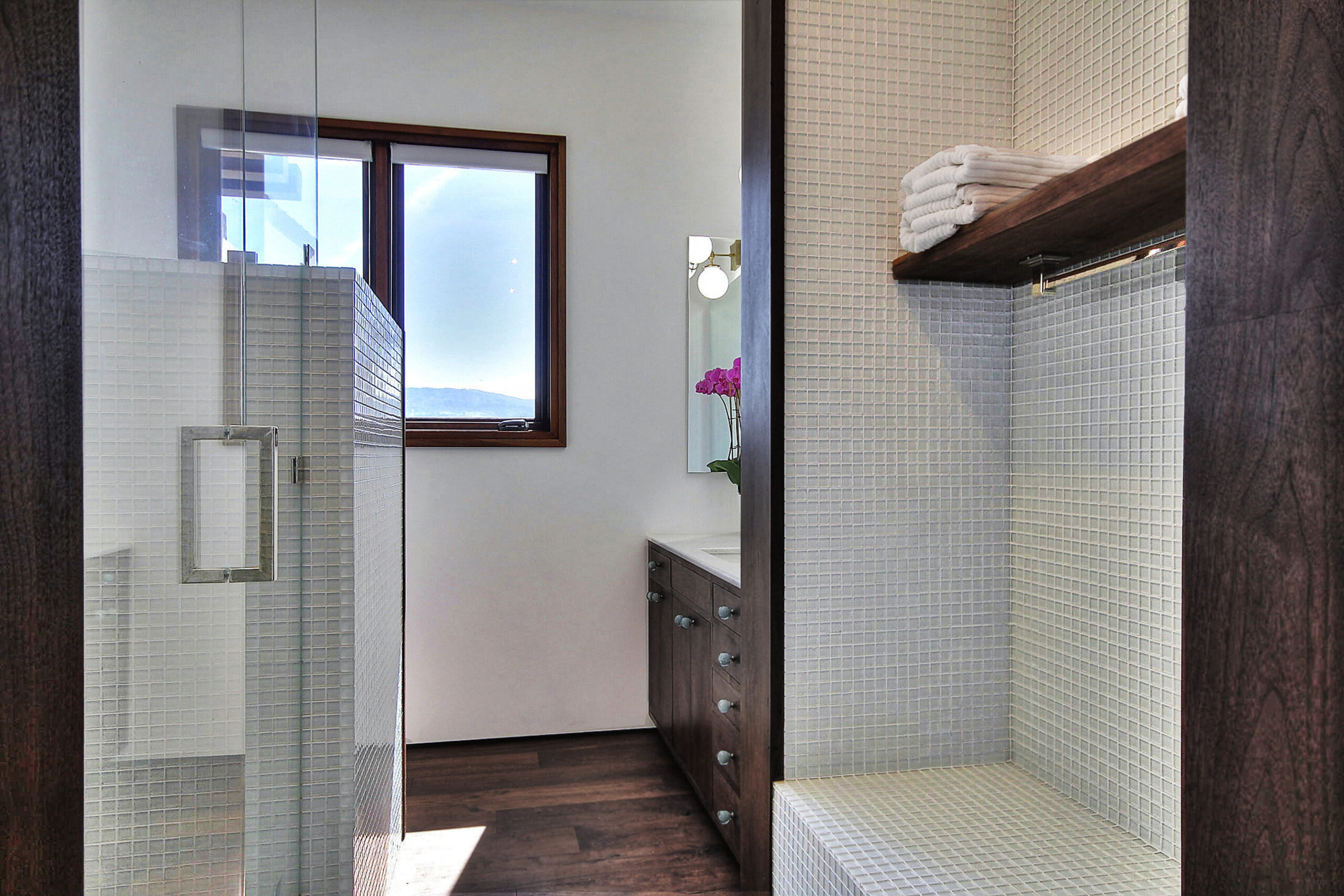
Positioning the home on a long east/west axis allows for southern exposure in most every room. The informal open floor plan with its wide solid walnut plank flooring maximizes views and light with glass curtain walls and doors spanning the southern length of the house, blending interior and exterior living via expansive terraces and openings. Strategically placed interior partitions allow for visual access and facilitate casual living and entertaining across the public rooms while also creating intimate spaces within the open format.
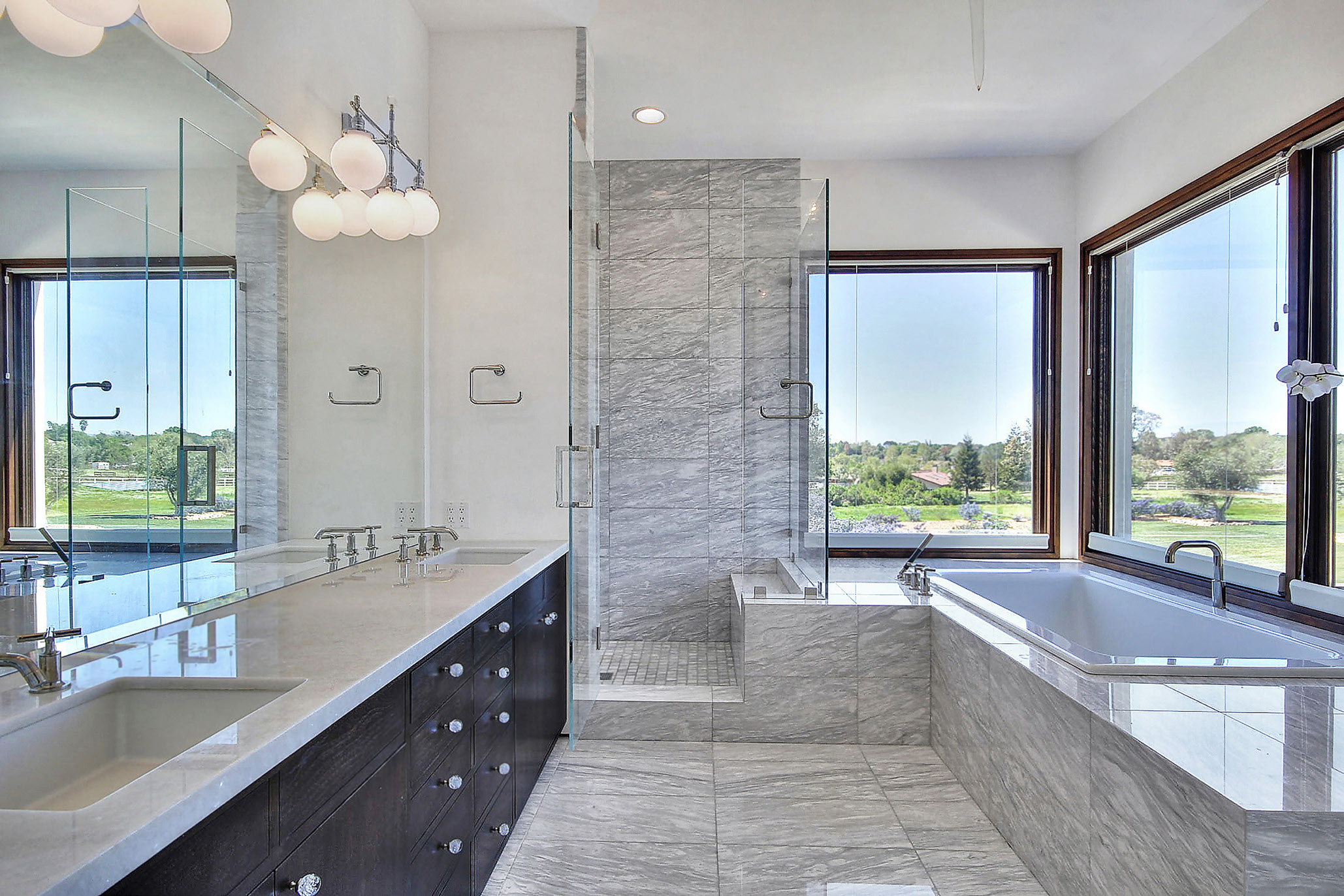
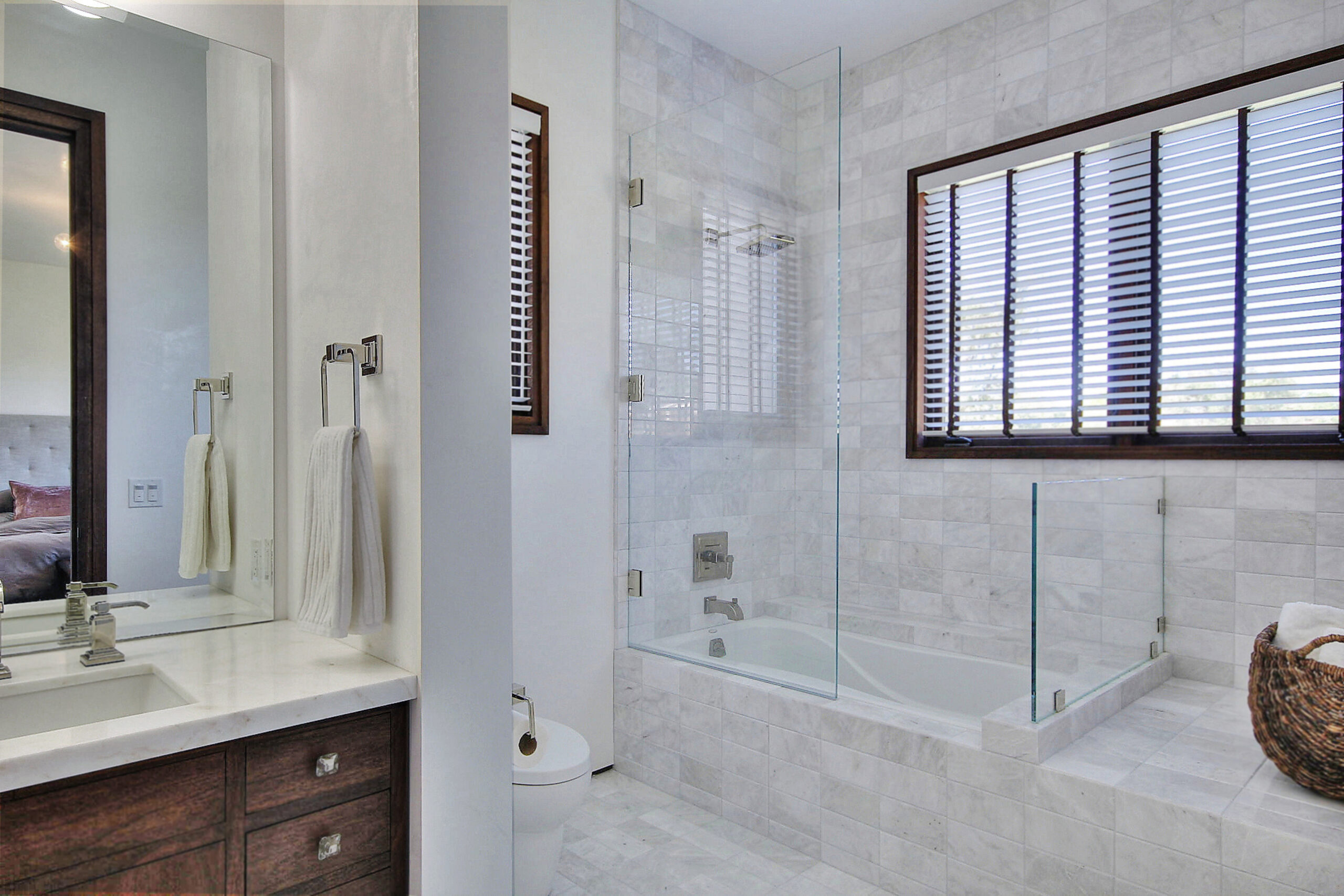
The five ensuite bedrooms – all with walk-in closets, are positioned at a distance from the public spaces and each other making the most of privacy and ensuring quiet mornings for late risers – a specific request of the client.
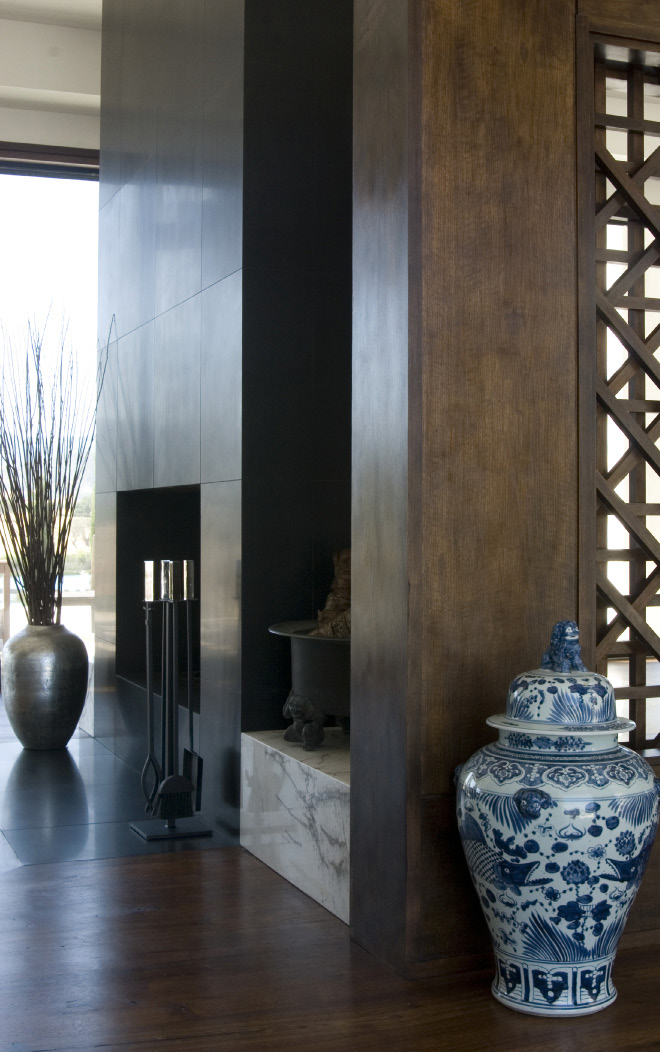
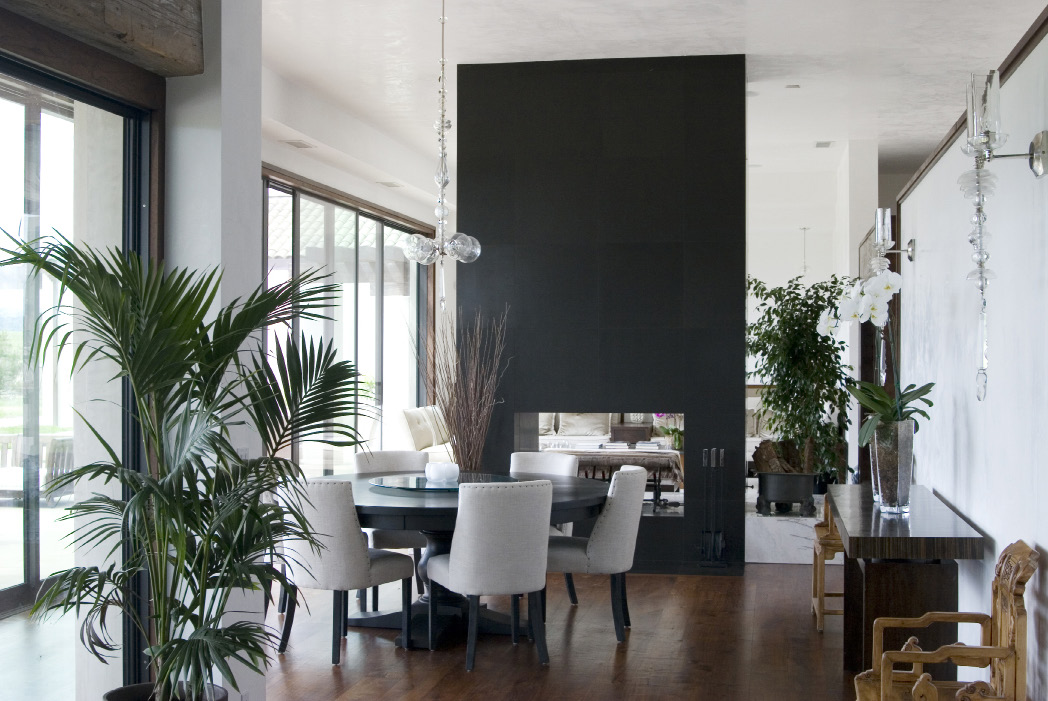
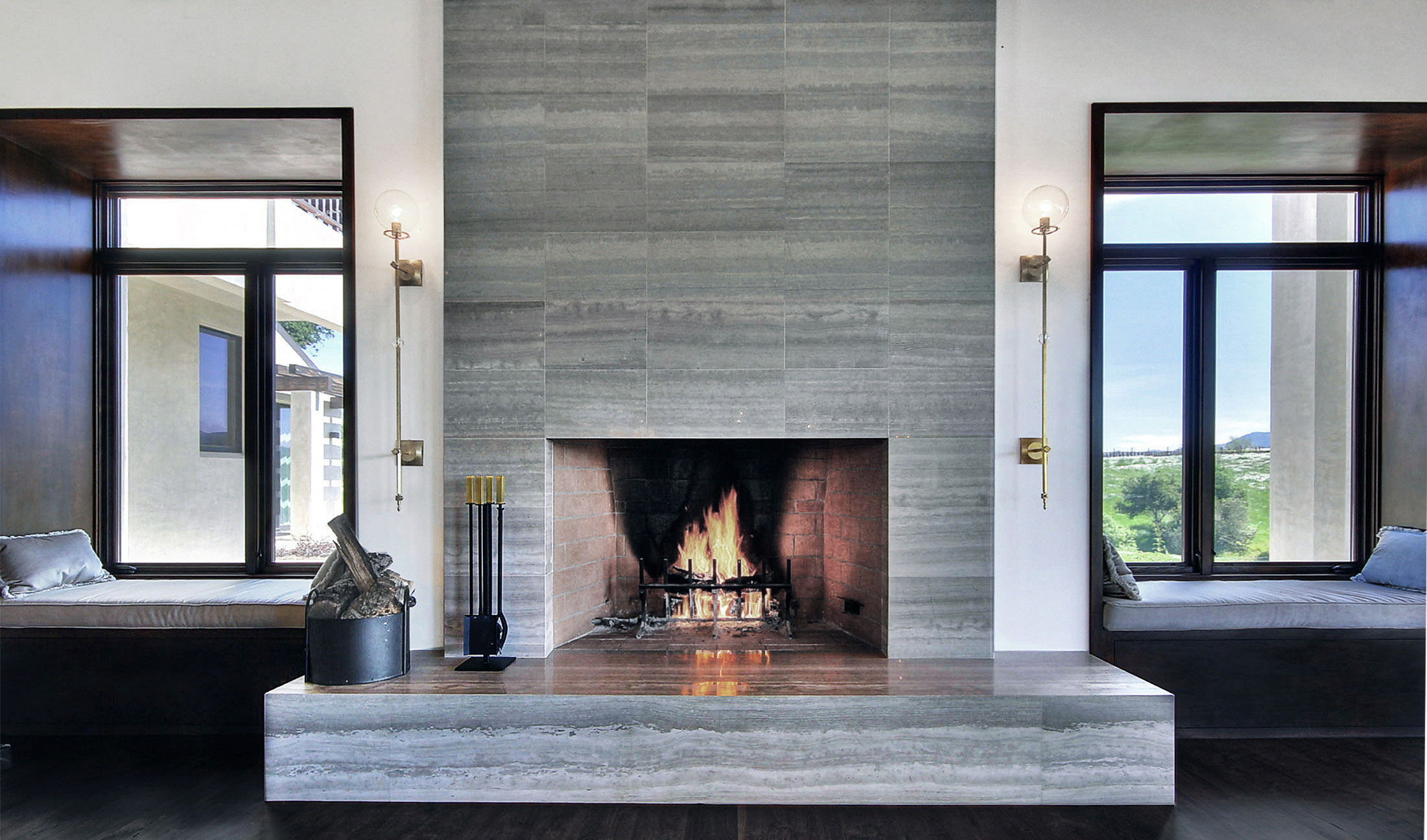
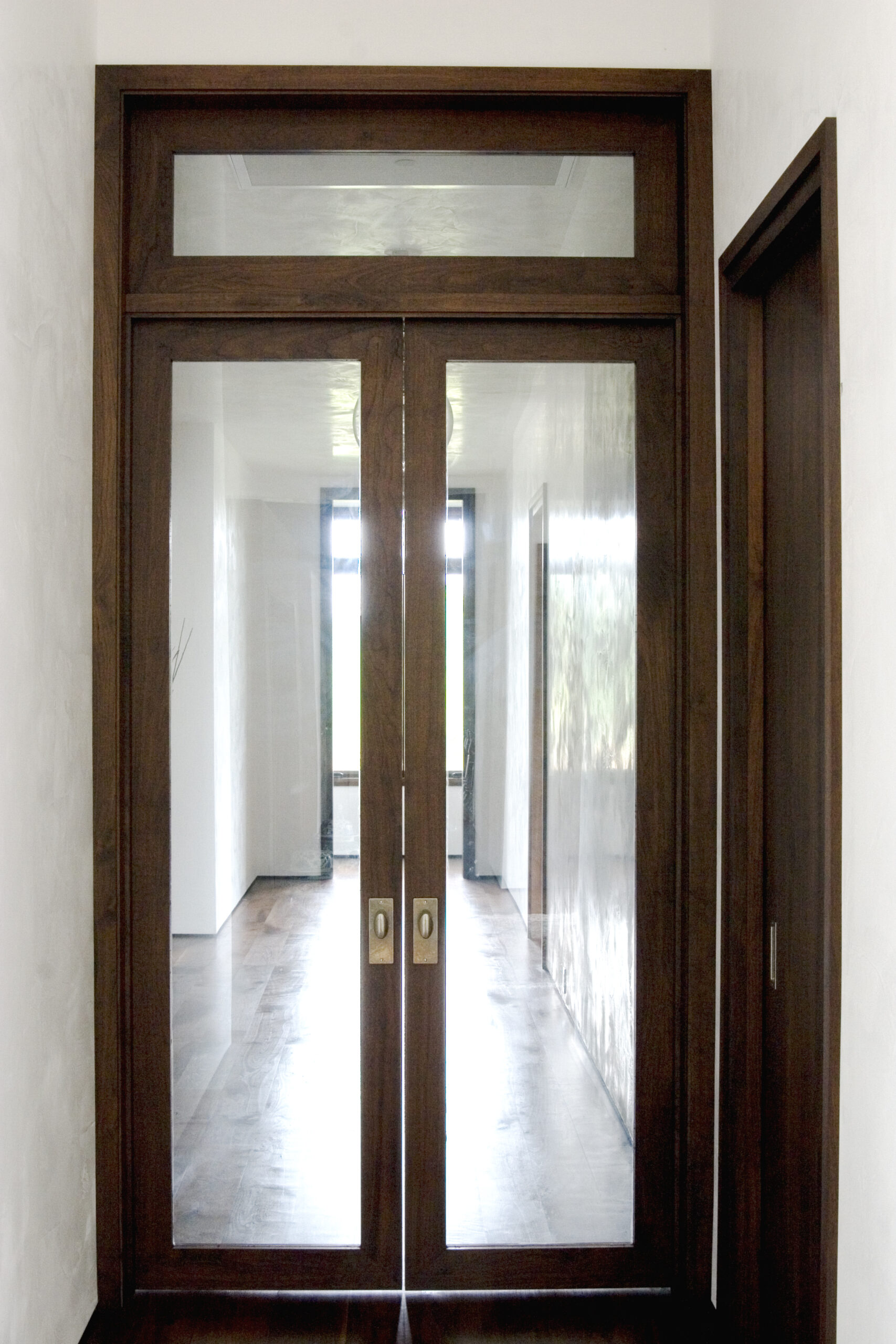
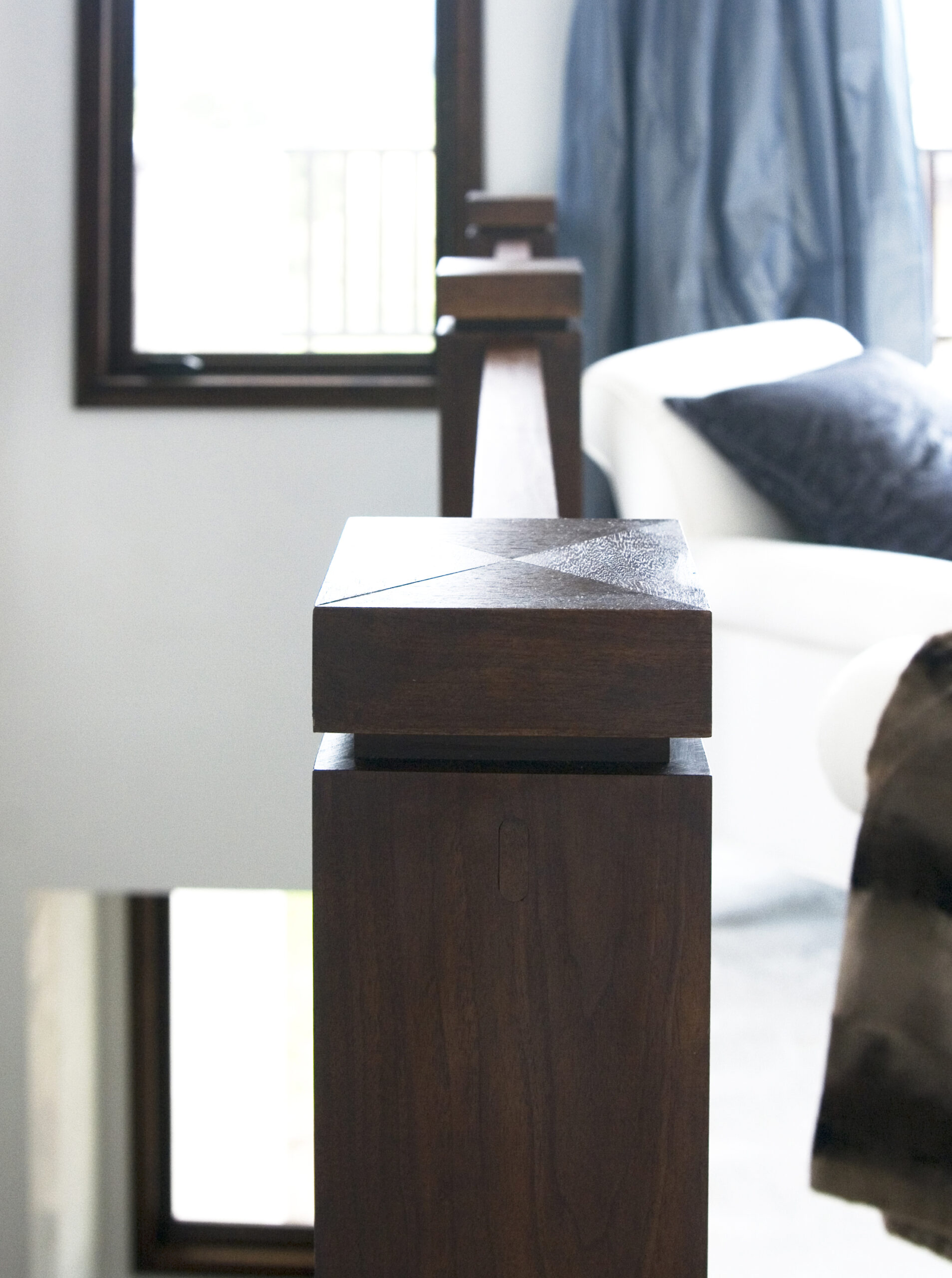
Solid walnut plank 8’ custom interior doors contrast with the white venetian plaster walls and ceiling. Two over-sized masonry wood burning fireplaces (the last allowed in CA) separate the living and dining room (one of which is double sided) and bookend the kitchen and lounge. 200-year-old beams – salvaged from a New Hampshire barn support the expansive sliding glass doors in the kitchen lounge.
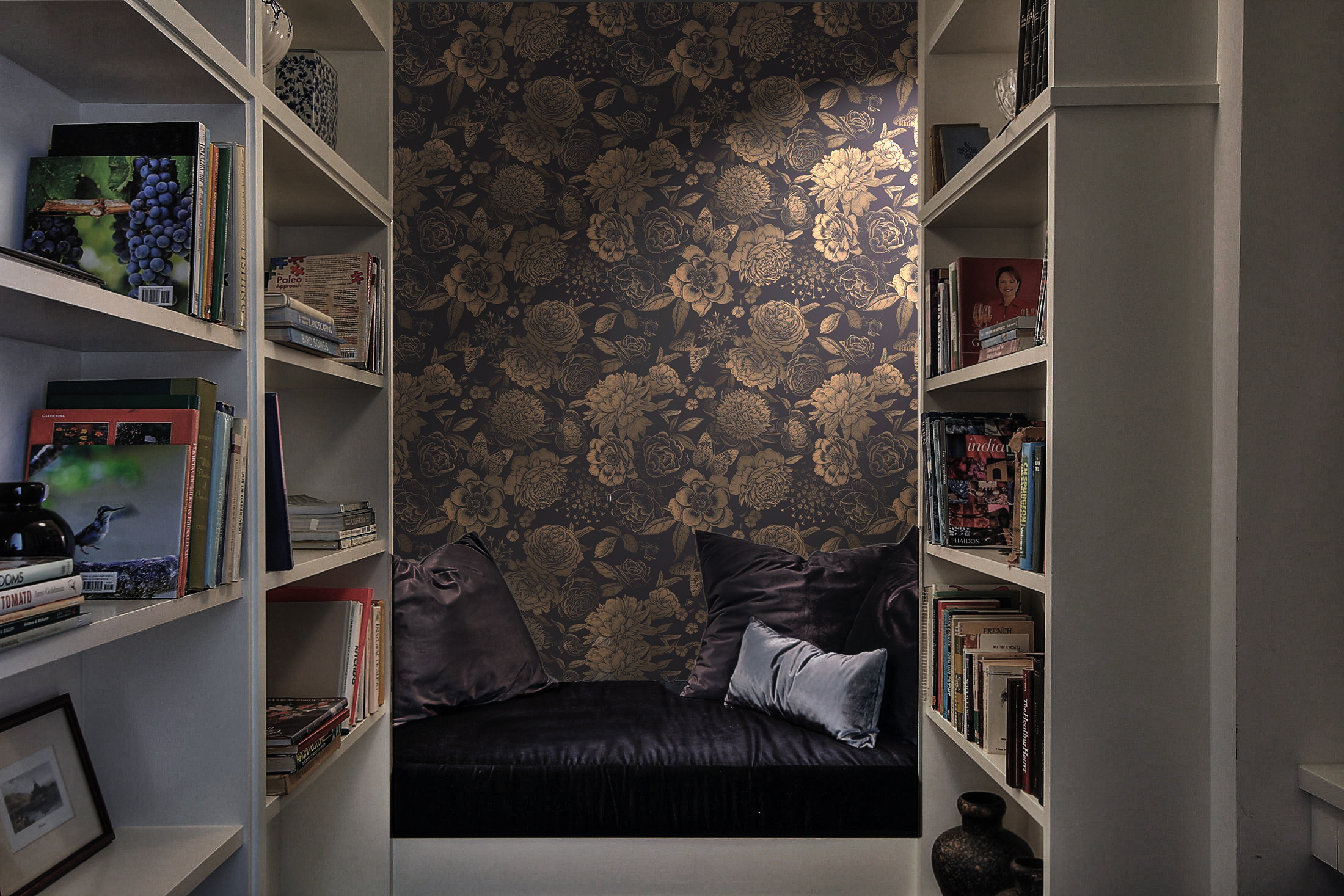
Waxed soapstone and travertine adorn the island and fireplace cladding in the kitchen, lounge, laundry and outdoor kitchen. The expansive kitchen with its soaring fireplace, deep window seats and adjacent lounge facilitate cooking and entertaining and are considered the heart of this home.
Landscape
The owners have a significant appreciation for outdoor living, and the local flora. Ease of access to all areas of the 26-acre estate were required and necessitated a thoughtful and considerable landscape plan.
Continuing along the winding drive, lined on both sides by towering Italian cypress trees, 11 ancient olive trees, obtained from a mature olive grove surround the house. A planted berm, covered in ceanothus, from deep lilac to white and peppered with white and pink manzanita, provide a sense of privacy from the nearest residence. In excess of 350 roses – noisettes, David Austins, and other heirloom varieties surround the circular driving entry and encircle the lake. Over 1000 linear feet of walking paths wind through the estate, from the remodeled barn, along the lake, to and around the perimeter of the 26 acres.
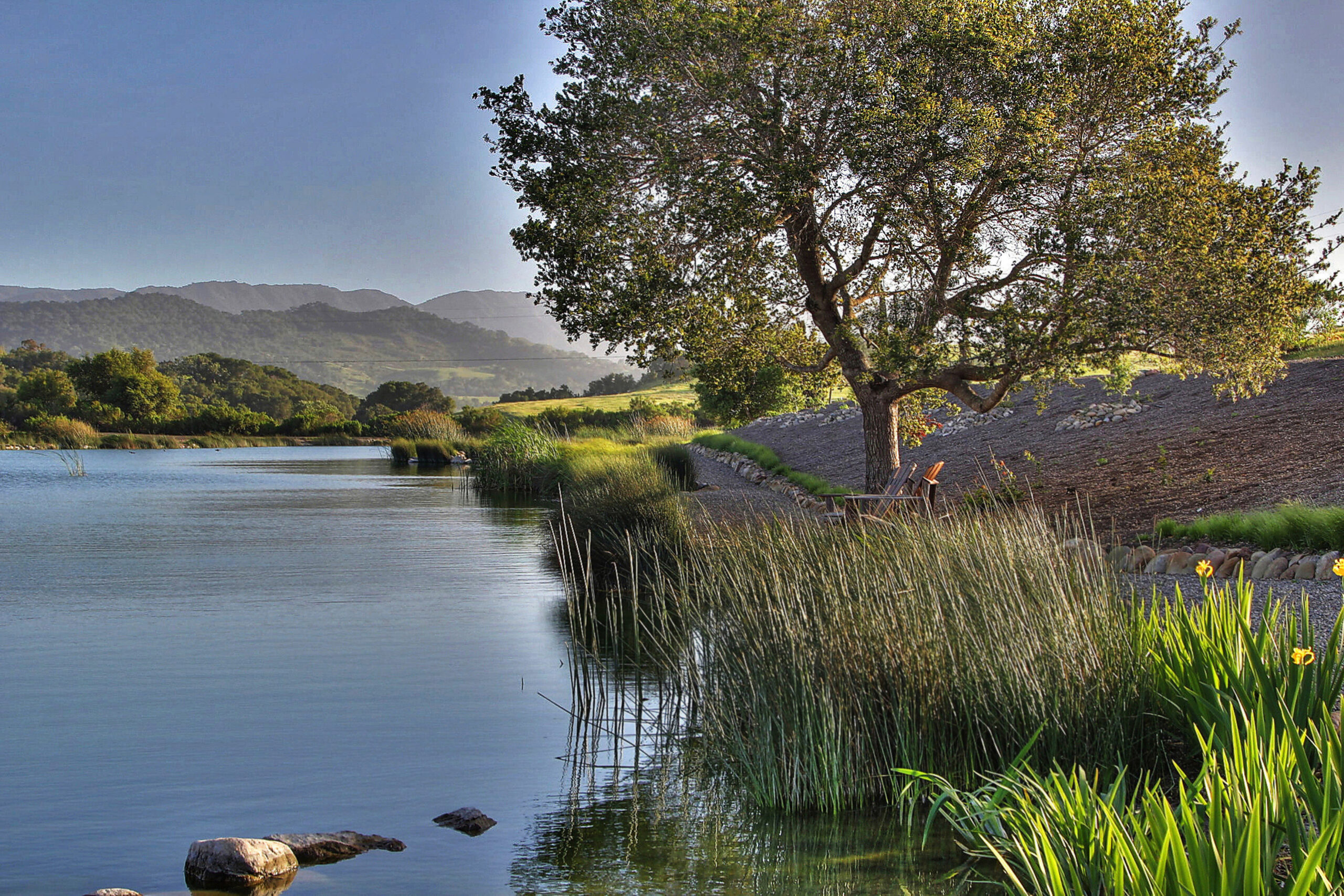
The creation of the lake was a major undertaking and now serves as a scenic, recreational and wildlife resource.
The two seasonal ponds were significantly reshaped to improve the aesthetics and create a single beautiful year-round lake. The smaller pond at the foot of the bluff below the residence was filled in, and a culvert was created to divert the regional runoff away from the newly reshaped lake. Several hundred tons of rocks/boulders were placed along the slopes and bed of the lake to create formations and structures that would serve as fish habitat (stocked with bass and bluegill) while also lining the upper slopes amidst swaths of roses as part of the larger landscaping plan. A new low-profile bridge to the small island serves as a fishing opportunity.
Blessed with this ideal placement of home, land and water, and detailed and built with a rigorous attention to structure, stability and a contemporized mission aesthetic, this estate takes full advantage of the surrounding pastoral and spectacular vistas while seamlessly transitioning from the interior to the exterior.

finished project